
Underground mining operations are common. The miners go deep inside the tunnels and extract special metals and other minerals. However, carrying those minerals from an underground pit to the surface can be tricky. That’s where the underground conveyor system comes in handy. However, the question is: How much does an underground conveyor system cost?
Interestingly, the conveyor system has a bunch of different parts and components. These components or units work together to ensure the smooth transfer of coal, ore, and minerals to the surface. So making a fully functional conveyor system requires all these components, which contribute to its overall cost. In this article, I discuss the cost of the underground conveyor system. So, let’s get started.
What is the Underground Conveyor System?

Before discussing prices, let’s first understand the basics of the underground conveyor system.
The underground conveyor system comprises various components. Among these, the conveyor belt is the most important, which helps transfer materials. This belt moves continuously without stopping. Material loaded onto or placed on it is safely removed from the mining area. This system is used in all modern underground mining operations.
Interestingly, mining companies used to rely on trucks to transport materials. This means of material handling was more expensive and less reliable. In underground conditions, truck wear and tear was a significant issue. Additionally, their fuel consumption was high, making this option less cost-effective. That’s why mining companies started using dedicated conveyor systems.
This material-handling system uses a conveyor belt. This belt is thick and durable, and it forms a loop to convey material out of the mining pit. In fact, the material reaches the processing unit with ease. As I said earlier, the underground conveyor system consists of several components. These include:
- Steel Frame
- Drive system
- Conveyor belt
- Rollers or idlers
- Automated sensors
Each of these components is equally important for the proper functionality of the conveyor systems. It is worth noting that the drive system consists of motors that are powered by electricity. This gives the conveyor belt the power to move in a loop. These underground conveyor systems can be medium- or large-sized and vary in price.
A large underground conveyor system is used in extensive mining operations. The miners dig very deep (several kilometers) in these operations. They load the extracted minerals, coal, ores, and other materials on the conveyor belt. These belts move continuously, ensuring a smooth transfer of material outside of the mining pit. What makes this conveyor system stand out is its near-zero downtime.
How Much Does an Underground Conveyor System Cost?
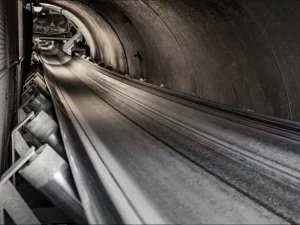
There are no fixed costs for the underground conveyor system. The reason is that this system is built for specific mining operations and varies in its cost. You should expect to pay $100,000 for a small underground conveyor system. In contrast, the price might be $5 million to $10 million for a large conveyor system spanning several kilometers.
Underground conveyor systems are not manufactured in standard sizes or configurations. They are made after analyzing the mining operation and its needs and capacity. You cannot just go into a shop and buy an underground conveyor system. This makes the cost estimation of the conveyor system difficult. That’s because every project requires a conveyor system of different capacities.
When you order a conveyor system, the company will conduct a thorough assessment. They will first learn about the duration of the mining operation, the system’s capacity, and other parameters. After analyzing these, you’ll get a quote from the conveyor belt manufacturing company. Two major factors that influence the cost of underground conveyor systems are length and capacity.
The longer the conveyor system, the higher the cost will be, and vice versa. Why? The reason is that longer systems require more materials in construction. A bigger belt, more rollers, and a bigger frame all contribute to its higher cost. Conversely, the smaller underground conveyor is easier to make. It requires fewer materials due to a smaller belt, fewer rollers, a smaller frame, etc.
Secondly, the capacity of the conveyor system is also an essential factor that controls its price. This capacity is typically measured in tons per hour (TPH). The conveyor system with higher TPH (tons per hour) will be more expensive and vice versa. On average, $100,000 is a good estimate for a small underground conveyor system. The prices will go up if you increase the size, capacity, power, and automation features.
Cost of Main Components of an Underground Conveyor System
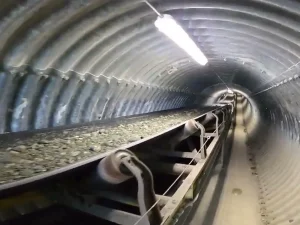
As I said earlier, many components make up underground conveyor systems. Each of these components has its own cost. Their combined prices make up the overall cost of the fully functional conveyor systems. In the section below, I will discuss each component of the underground conveyor system and its cost.
1- Conveyor Belt
The conveyor belt is the heart of every conveyor system. This belt generally consists of three layers. The inner and outer layers are generally made of rubber. The middle fabric or steel cord reinforcements make the belt more durable and robust. The cost of the conveyor belt varies from $50 to $500 per foot. You can estimate the cost for your specific case by multiplying the belt length (in feet) by the cost per foot. Here is the list of some belt types and their cost estimation:
| Belt Types | Typical Price Range |
| Standard mining conveyor belt | $50 – $150 per foot |
| Heavy‑duty belt with steel cords | $100 – $300 per foot |
| Fire‑resistant or special‑spec belt | $200 – $500 per foot |
2- Drive System
The drive system is another essential part of the underground conveyor system. This component provides the power required for the belt to move in the loop. It consists of an electric motor powered by electricity. The motor is directly connected to the gearbox for controlling the belt speed. The cost of the drive system can be around $30,000 for small- to medium-sized underground conveyor systems. However, the longer, heavier underground conveyor system requires a larger drive system. It can cost around $100,000, increasing the overall cost of the conveyor system.
3- Rollers or Idlers
Rollers or idlers are crucial for the safety of conveyor belts. These are smaller wheels that are placed under the conveyor belt. During operation, they ensure that the conveyor belt does not rub against the surface, preventing friction. Additionally, they prevent sagging, improving belt performance. One roller can cost around $20 to $100, depending on its size. Remember, an underground conveyor system consists of hundreds of rollers along the belts. So they make up a huge proportion of the conveyor system’s cost. The longer the conveyor system, the more rollers or idlers will be required, and vice versa.
4- Body or Frame
The body or frame is another integral part of the underground conveyor system. Manufacturers generally use high-grade steel in making this frame. Why? That’s because this body must be very strong as it holds all the other components. If the body deteriorates, it will affect the performance of all the other parts, including the drive system and rollers. The bigger the conveyor system, the longer the frame will be, and vice versa. Remember, this frame goes along the conveyor belt. On average, this body or steel frame accounts for 20% of the cost of the underground conveyor system.
Underground Conveyor System Cost Breakdown
As discussed above, each conveyor belt component has its own price. The individual prices of each part are combined to determine the final conveyor belt cost. Here is the table showing the breakdown of prices of these components for a conveyor system:
| Component of Conveyor System | Estimated Cost Share |
| Conveyor Belt | 25–40% |
| Drive System (Motor & Gearbox) | 10–20% |
| Rollers or Idlers | 10–15% |
| Frame or Structure | 15–20% |
| Control & Automation Systems | 5–10% |
| Installation & Labor | 10–20% |
Factors that Affect the Cost of an Underground Conveyor System
The cost of the underground conveyor system depends on different factors. In fact, belt manufacturers also consider these factors before providing final quotes. In the section below, I will discuss these factors influencing the prices of underground conveyor systems:
1- Conveyor Length
First, the length of the conveyor system defines its cost. The longer the conveyor system, the pricier it will be, and vice versa. Why? The reason is that longer conveyor systems require larger belts, more rollers, bigger frames, and so on. All these factors increase the cost of longer conveyor systems. In contrast, smaller conveyor systems require less material to make, reducing costs.
2- Conveyor Capacity
The capacity of the underground conveyor system is also crucial. Systems with higher material transportation capacity are more expensive. The reason is that such systems come with wider belts, which require more material to make. Additionally, more rollers are used to handle large weights and loads, making the system very costly.
3- Materials They Transport
It is worth noting that transporting abrasive materials is more challenging. The conveyor system must use belts reinforced with steel wire for improved safety. However, the prices of these belts are very high, which increases the overall cost of the underground conveyor system. Regular conveyor belts (low cost) can be used to transport soft materials.
4- Vertical Elevation (Incline)
Conveyor systems with greater vertical elevation are very costly. These systems can carry material from very low levels to higher levels. A steeper incline conveyor system is useful in very deep or underground mining pits. The major reason behind their higher cost is that they use very powerful motors and drive systems. Such motors are very expensive, which contributes to the higher cost of the conveyor system.
5- Automation and Control Systems
Modern conveyor systems feature automation and sensors. They can send you alerts if something goes wrong with the system. Additionally, these belts can automatically stop in an emergency thanks to their sensors. However, such features make underground conveyor systems very expensive. In contrast, conveyor systems with no automated features are less costly.
6- Labor Cost & Regional Impact
Interestingly, labor costs vary across regions. For example, these costs are high in the US but very low in China and other Asian countries. So, belt manufacturers in China reduce the cost of underground conveyor systems because they pay their labor less. So those systems made in China are cheaper than those made in the USA. Modern Chinese brands also use quality assurance to improve the quality of conveyor systems.
Conclusion
Let’s conclude: underground conveyor systems are a must for modern mining operations. Despite their high prices, mining companies are actively investing in them. The reason is that they are very helpful for transporting the material at a very low cost. What makes these conveyor systems favorable for mining operations is their very low downtime.
So, this helps mining operations continue 24/7, and extracted material keeps coming out for processing. On average, a small underground conveyor system costs around $100,000. This can double or triple if the conveyor system is larger. In this article, I have discussed the cost of a conveyor system and its components.