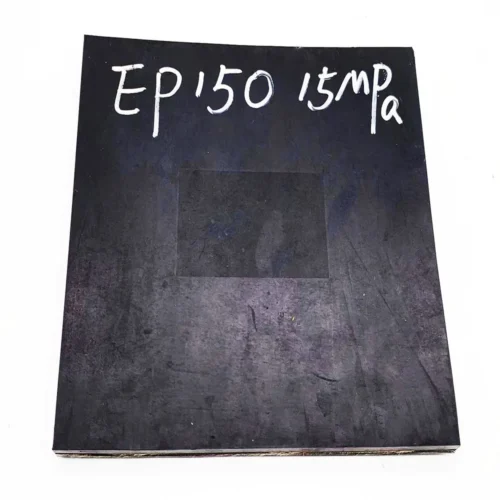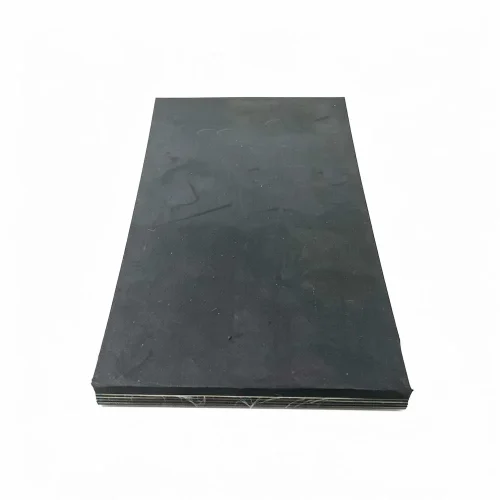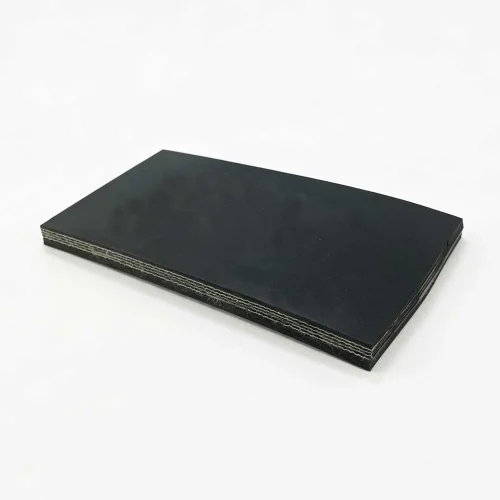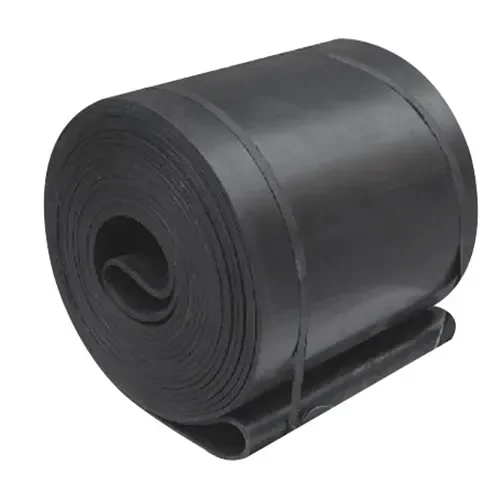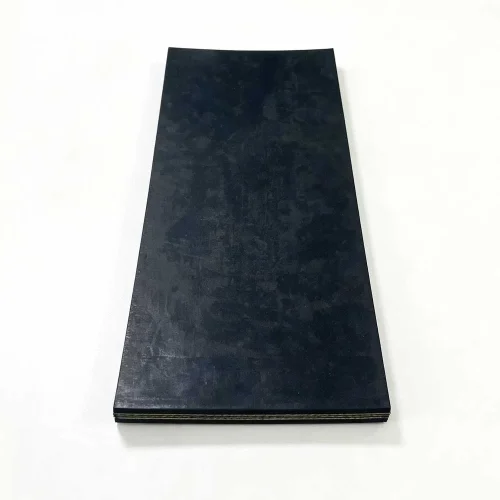


Beschreibung aus kältebeständigem Förderband
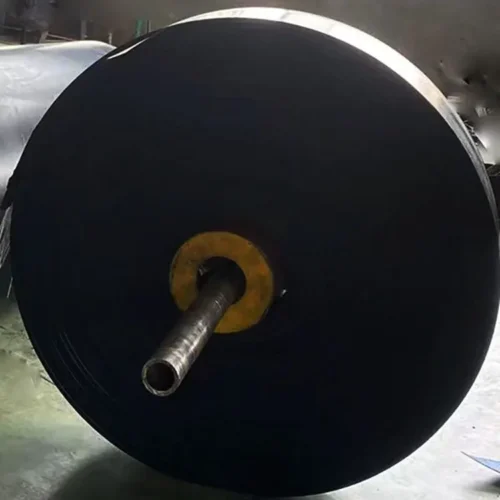
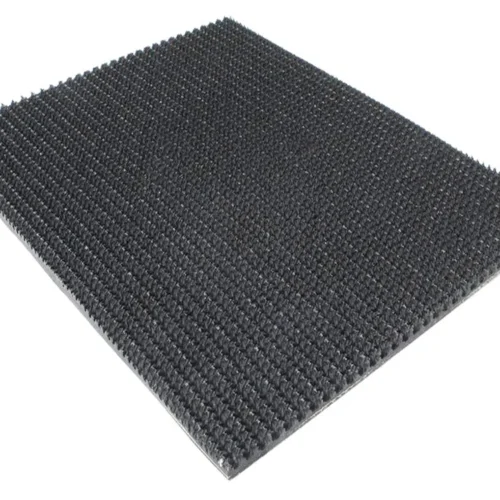
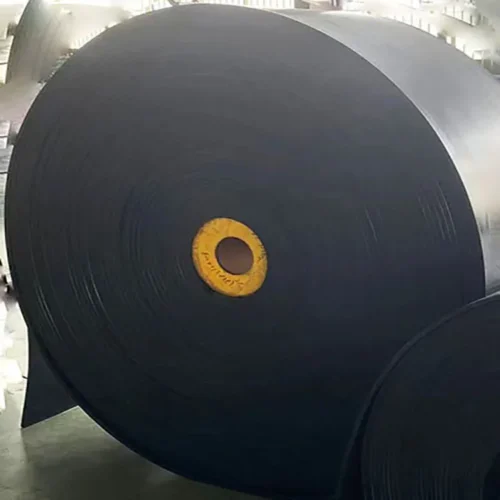
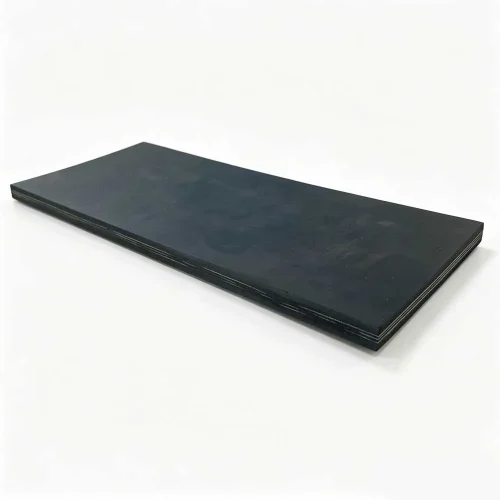
Die Riemenkarkasse von kältebeständig conveyor belt is Baumwolle, Nylon oder Polyester-Segeltuch. Die Deckschichten bestehen aus einer Mischung aus Naturkautschuk und Neoprenkautschuk. Sie zeichnen sich durch gute Elastizität, Stoßfestigkeit und Kältebeständigkeit aus. Unsere Riemen sind speziell dafür konzipiert zur Entsorgung von Materialien unter 40 °C. Sie sind mit mehrlagigem Polyester- oder Nylongewebe verstärkt und mit kältebeständigem Gummi überzogen, das nach einer speziellen Rezeptur und einem speziellen Herstellungsverfahren gefertigt wurde. A kältebeständig conveyor belt is appropriate for delivering items in cold districts. Bevor unsere Produkte unser Werk für kältebeständige Förderbänder verlassen, getestet werden für die Zugfestigkeit, Abriebschutz, und Adhäsion, so treffen die Anforderungen der Kunden.
Types of Cold Resistant Conveyor Belt
(H) Tear-resistant type:
- Zugfestigkeit: ≥24 MPa
- Dehnung beim Bruch: ≥450%
- Abrasion Volume: ≤120 mm³
It has high tensile strength and elongation at break, suitable for applications requiring high tear resistance.
(D) Abrasion-resistant type:
- Zugfestigkeit: ≥18 MPa
- Dehnung beim Bruch: ≥400%
- Abrasion Volume: ≤100 mm³
It has a low abrasion rate, suitable for conveying materials such as coal, ore, and gravel.
(L) Standard type:
- Zugfestigkeit: ≥15 MPa
- Dehnung beim Bruch: ≥350%
- Abrasion Volume: ≤200 mm³
It is suitable for conveying materials in low-temperature environments.
Cold-resistance Rating Classification
C1 Rating
- Working temperature: -45℃ to +45℃
- Tensile strength & elongation change: ±20%
C2 Rating
- Working temperature: -50℃ to +45℃
- Änderungsrate der Zugfestigkeit: ±25%
- Elongation at break change rate: ±30%
Spezifikation
| Grenzabweichung der Deckschichtdicke | ||
|---|---|---|
| Norm: HG/T3647-2014 | ||
| Nennstärke der oberen und unteren Abdeckung | Grenzabweichung | |
| ≤4 | Obere Abweichung: nicht angegeben; untere Abweichung: 0,2 mm | |
| >4 | Obere Abweichung: nicht angegeben; untere Abweichung: 5% der Grundgröße | |
| Physikalische Eigenschaften des Abraums | |||||
|---|---|---|---|---|---|
| Norm: HG/T3647-2014 | |||||
| Projekt | Inhaltsverzeichnis | ||||
| H | D | L | |||
| Zugfestigkeit in MPa (mindestens) | 24 | 18 | 15 | ||
| Bruchdehnung/% (mindestens) | 450 | 400 | 350 | ||
| Verschleißvolumen/mm3 | 120 | 100 | 200 | ||
| Alterungstest (70 °C × 168 h) Änderungsrate der Zugfestigkeit/% Änderungsrate der Bruchdehnung/% | -25 ~ +25 | -25 ~ +25 | -25 ~ +25 | ||
| Kältebeständigkeit | Änderungsrate der Zugfestigkeit/% | C1 (-45 °C) | ±20 | ||
| C2 (-50 °C) | ±25 | ||||
| Änderungsrate der Bruchdehnung/% | C1 (-45 °C) | ±20 | |||
| C2 (-50 °C) | ±30 | ||||
| Anmerkungen: C1 – Die Umgebungstemperatur beträgt: -45 °C bis +45 °C; C2 – Die Umgebungstemperatur beträgt -50 °C bis +45 °C | |||||
Funktionen und Vorteile
1. Impact Resistance: It can withstand the impact of materials such as coal and ore and is not easily cracked.
2. High Elasticity: The conveyor belt is made of a mixture of natural rubber and BR (butadiene rubber), which has high elasticity.
3. Cold Resistance: The conveyor belt can maintain stable performance in low-temperature environments ranging from -40℃ to -50℃.
4. Wear Resistance: It can withstand continuous friction from coal and gravel without premature wear.
5. Flexibility: It can bend flexibly in low-temperature environments, reducing the problem of hardening.
6. Tear Resistance: The conveyor belt has a fabric core or steel cord core structure, which improves its tear resistance.
Anwendung aus kältebeständigem Förderband
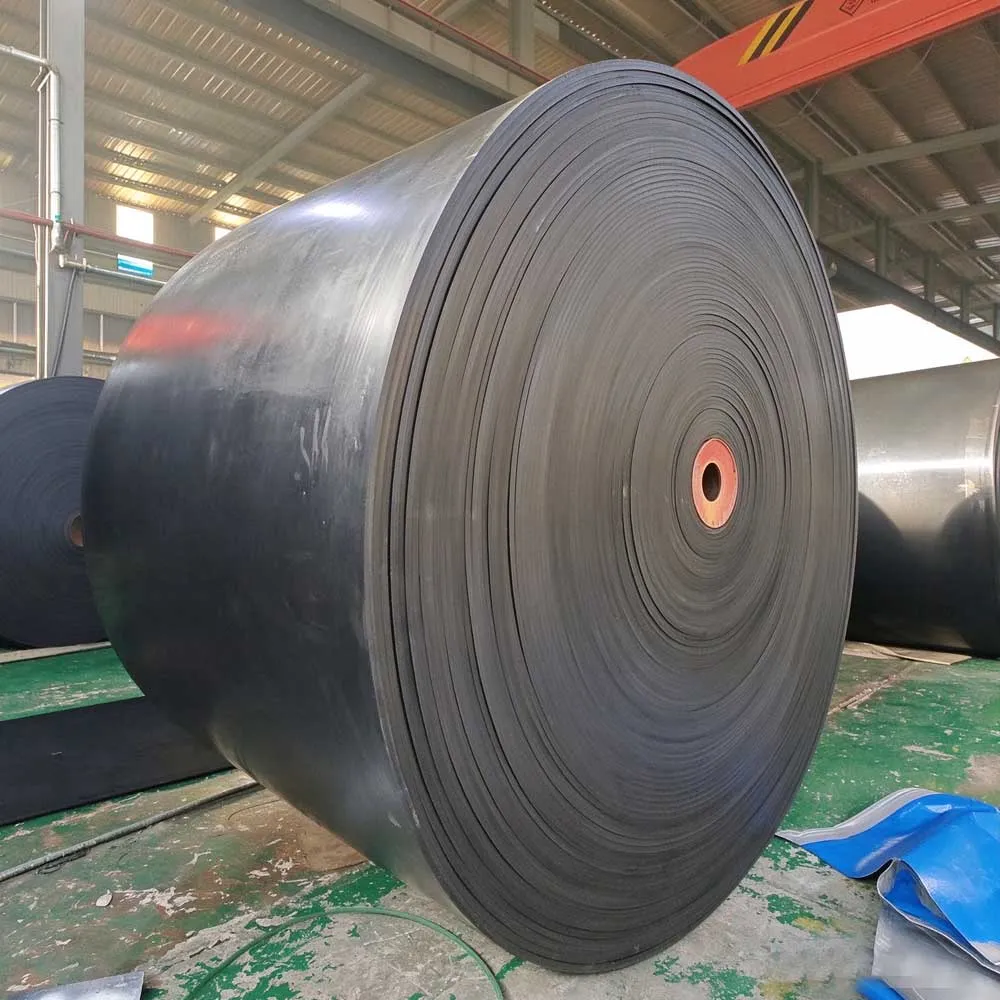
Unser Unternehmen ist einer der Fachleute kältebeständiges Förderband Riemenlieferanten. As a high-quality conveyor belt, our customized cold-resistant conveyor belt has weithin angewandt worden für die Materialanlieferung von Zement und Kohle Minen, Steinbrüche, Leistung Bahnhöfe, und Stahl Mühlen.
- Bergbau: Transporting iron ore, copper ore, and other ores in open-pit mines.
- Coal transportation: The transportation of coal from coal mines and power plants.
- Quarry: Transporting materials such as crushed stone, granite, limestone, and gravel.
- Port loading and unloading: Transportation of materials such as coal and ore at docks and ports.
- Cement and building materials industry: Transporting limestone, clinker, and other bulk building materials.
- Cold region transportation: Material transportation in high-latitude, cold regions.