
Conveyor belts are a necessity in modern manufacturing industries. Their role in transporting materials and handling logistics makes them a must-have piece of equipment. Two common materials used to make these belts are PVC and PU. Both of these materials offer unique properties, sparking debate over PVC vs PU conveyor belts.
The majority believe PVC conveyor belts are superior primarily due to their cost-effectiveness. However, when it comes to performance, PU conveyor belts stand out and overshadow the PVC belts. These conveyor belts differ in many ways, making them suitable for different applications. In this article, I will explore the differences between PVC and PU belts.
Key Differences Between PVC Conveyor Belt and PU Conveyor Belt
Using the right conveyor belts performs better and lasts longer. However, selection between these belts can be confusing if you don’t understand their differences. Below are the sections where I will explain the differences between these two conveyor belts.
1- Material Composition & Structure

PVC (polyvinyl chloride) and PU (polyurethane) are both synthetic plastics. Structurally, these belts generally have three layers. The bottom layer in both belts is made of rubber. The middle layer is a reinforcement made of polyester fabric. However, these belts differ in terms of their top layers. The top layer of the PVC conveyor belt is made of PVC.
On the other hand, PU conveyor belts have a top layer made of polyurethane. This difference in the top-layer material is what makes them unique. PVC material makes PVC belts rigid, while PU material makes PU belts more flexible and perform better. All the other differences between these conveyor belts are due to this material difference in the top layer.
2- Strength & Load Carrying Capacity
PVC conveyor belts are not very robust and have limited load-carrying capacity. The reason is that they are rigid and rely solely on the polyester reinforcement in the middle layer. This reinforcement gives this belt strength, but not extraordinary load-carrying ability. Conversely, PU conveyor belts have two advantages.
First, they have strong polyester reinforcement in the middle layers. Additionally, these belts are more flexible, which increases their load distribution. As a result, PU conveyor belts are stronger and can withstand higher loads. If you want a higher load-carrying capacity, PU conveyor belts are the best option.
3- Flexibility & Durability
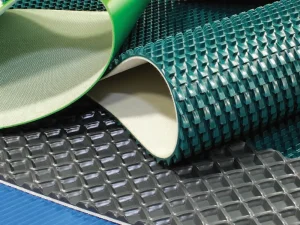
Flexibility and durability are closely linked in conveyor belts. PVC conveyor belts are not ideal if you consider flexibility. This is because the top layer is made of PVC material, which is a bit stiff and rigid. As a result, these belts are stiff and can crack, especially when subjected to harsh forces. Since they are prone to cracking, their durability is compromised.
On average, PVC belts have a lifespan of about 3 to 5 years. On the other hand, PU conveyor belts offer excellent flexibility and durability. The reason is that the polyurethane used to make these belts is very flexible. As a result, these belts are less prone to cracking and damage. These belts remain in good condition even if used harshly and last longer. The average lifespan of PU conveyor belts is around 8 to 10 years.
4- Tear and Cut Resistance
Conveyor belts are used to transport different materials. In some cases, they are even used to transport sharp and abrasive materials. This is more common in construction or mining industries. So, these abrasive materials can cause tears and cuts if the belts are not strong enough. PVC conveyor belts can get tears and cuts.
The PVC used in their making is less durable and can be cut. On the other hand, PU conveyor belts stand out for their tear- and cut-resistance. PU plastics are tougher and have stronger internal bonding. This strong structure ensures this material resists penetration by harsh materials. As a result, the PU conveyor belts perform better in carrying abrasive materials without tearing.
5- Oil and Grease Resistance
In some industries, such as food processing, belts transport oil and greasy products. In this case, they are exposed to unwanted oil spills. If they are not oil- and grease-resistant, they may deteriorate quickly. PVC conveyor belts resist oil when exposed for shorter durations. However, if these belts are exposed to oil for a longer duration, they react to oil and grease.
This causes swelling in the belts, leading to their deterioration. On the other hand, PU materials are highly resistant to oil and grease. Why? The reason is that PU plastics are nonreactive. Even if exposed to oil for days without cleaning, this material does not deteriorate. The PU conveyor belts are excellent for oil and grease resistance.
6- Temperature Resistance Range
PVC conveyor belts are not ideal if you want better temperature resistance. That’s because the material they use is weak. As a result, PVC conveyor belts perform well in moderate-temperature conditions. Both very high and very low temperatures affect their performance and stability. They can withstand -10°C to +70°C, but beyond this, they start to lose strength and structure.
On the other hand, PU conveyor belts are more stable than PVC belts. They also have temperature limits. However, they remain stable in more extreme conditions than their counterparts. PU conveyor belts work well in temperatures ranging from -20°C to +80°C (up to 100°C in some grades). Your temperature range should be within limits when using PU belts.
7- Abrasion & Chemical Resistance
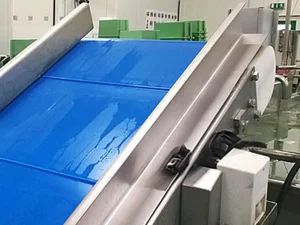
When buying conveyor belts, you should always check abrasion and chemical resistance. A belt with these two boxes ticked offers better performance and lasts longer. Abrasion resistance refers to how well a belt performs when subjected to continuous rubbing or friction. PVC conveyor belts are decent if they experience occasional friction.
However, they can withstand repeated friction, which could damage them. In contrast, PU conveyor belts are tougher and withstand repeated friction. So their abrasion resistance is generally superior to that of PVC. Honestly, both of these belts should not be exposed to chemicals, especially harsh acids. However, PU belts perform slightly better when exposed to mild chemicals.
8- Ease of Cleaning & Hygiene Level
Conveyor belts with better ease of cleaning and hygiene level are superior. As you know, belts are used for food processing and other such applications. If they are difficult to clean, they become unhygienic. Unfortunately, PVC materials have tiny pores on their surface. These pores get dirt particles and other contaminants.
During cleaning, the particles remain stuck, making them unhygienic. PU conveyor belts are a better option as they are easier to clean and more hygienic. The reason is that the surface of PU materials lacks pores, which could trap food or dust particles. So cleaning these belts is easier, ensuring their better hygiene. This makes them an ideal option for the food industry.
9- Maintenance & Environmental Resistance
As I mentioned above, PVC conveyor belts have tiny holes. These holes trap dust particles and other contaminants. You’ll have to clean them regularly to ensure they remain clean. PU conveyor belts have non-porous surfaces. You don’t need to clean them regularly, which reduces maintenance headaches.
In terms of environmental conditions, PU conveyor belts perform better. These conditions include humidity, moisture, rain, and so on. These PU conveyor belts easily withstand these factors without deterioration. However, PVC conveyor belts may weaken if exposed to moisture for extended periods. I recommend PU belts if they will be exposed to harsh environmental conditions.
10- Cost Comparison & Applications
Budget is a critical factor that controls buying decisions when choosing between PVC and PU belts. PVC conveyor belts are generally inexpensive and easily available in the market. The reason is that the material used in their making (PVC) is cheaper. So making these belts is affordable, resulting in lower prices.
On the other hand, PU conveyor belts are more expensive than PVC conveyor belts. Why? This is because polyurethane plastics are more expensive due to their favorable properties. These include better flexibility, strength, performance, and abrasion resistance. When it comes to application, a PVC conveyor is an ideal option when your primary goal is to save money.
On the other hand, PU conveyor belts are the best option if you want better performance. Below is a table comparing the best applications of these two conveyor belts.
| PVC Conveyor Belt Applications | PU Conveyor Belt Applications |
| Packaging industry | Food processing industry |
| Warehousing & logistics | Meat & dairy processing |
| Light material handling | Pharmaceutical industry |
| General manufacturing | Bakery & confectionery lines |
| Airport baggage systems | Hygiene-sensitive production |
| Textile & printing industry | High-precision industrial lines |
Frequently Asked Questions
What is the difference between PU and PVC conveyor belts?
PU conveyors are expensive but offer better strength and load-bearing ability. Moreover, they are resistant to oil, moisture, and heat. PVC conveyor belts are weaker but cheaper, making them ideal for budget-conscious individuals.
Which is better, PVC or PU?
I consider PU conveyor belts a better option compared to PVC belts. The reason is that these belts offer better durability, longevity, heat, and oil resistance. Although you’ll pay more for PU belts, you’ll get better value for money and performance.
Is the PU belt safer than the PVC?
Yes. PU conveyor belts are safe due to their non-reactive, non-porous surfaces. They maintain better hygiene and adopt more effective practices in the food processing industry.
What is the temperature range for a PVC belt?
The temperature limit of PVC belts is about -10°C to 70°C. Temperature beyond this limit or range can be destructive for these conveyor belts. However, PU belts offer a higher temperature range.
Conclusion
In conclusion, conveyor belts are made of different materials. Among these, PVC and PU plastics stand out due to their distinct properties. Conveyor belts made of these materials are suitable for different applications. I consider PVC conveyor belts suitable for applications where hygiene is not a concern. These belts are affordable, which is a key advantage. On the other hand, PU conveyor belts are performance-focused despite the higher price. They will last longer, offer better heat, chemical, and oil resistance.