
Every day, thousands of factories, warehouses, airports, and food plants move materials from one place to another. The main tool behind this smooth movement is most probably the rubber conveyor belt. It helps carry everything from small packages to heavy materials quickly and safely. In this way, it reduces manual effort, saves time, and makes the overall operation much more efficient. But if you are new to these belts, you might wonder: What is a rubber conveyor belt and how does it work? If this confuses you, worry not! In this guide, I will discuss everything about rubber conveyor belts, including their types, uses, and how they work. So let’s get started.
What Is a Rubber Conveyor Belt?
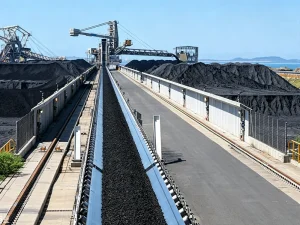
A rubber conveyor belt is a moving belt made of durable rubber, whether synthetic or natural. It carries materials from one place to another. It runs in a continuous loop over rollers and pulleys, making transportation smooth and efficient. Rubber conveyor belts are strong, flexible, and can handle both light and heavy loads.
But remember, a rubber conveyor belt is more than just a piece of moving rubber. Instead, it is made carefully with several layers. The first upper layer is made of durable rubber that provides both protection and flexibility. Its flexibility helps the belt move over rollers and pulleys without the risk of cracking or slipping. Also, this layer protects the belt from moisture, heat, and impact.
However, there is also an inner reinforcement layer that is made of fabric or steel cords. This layer protects the belt from stretching and tearing and helps move goods smoothly. This strong construction allows the belt to operate continuously in demanding working conditions. That’s why rubber conveyor belts have become a must-have in mining, construction, warehouses, and airports.
Main Parts of a Rubber Conveyor Belt
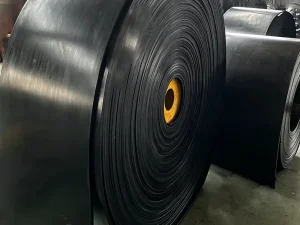
Now you have a basic idea about Gummiförderbänder and what they do. Right? But remember, a conveyor belt does not work alone. Instead, a series of components work together to move goods. So, before we discuss how it works, let’s first understand the major parts of a rubber conveyor belt.
- Rubber Cover: The rubber cover is the outer protective layer of the conveyor belt. It is the part that comes into direct contact with the materials being carried.
- Fabric or Steel Reinforcement: Inside the rubber belt is a strong reinforcement layer. It is made from fabric or steel cords. This layer gives the belt its strength and helps it carry things without stretching.
- Drive Pulley: The drive pulley is the part that powers the conveyor belt. It is connected to the electric motor, which rotates it.
- Tail Pulley: The tail pulley is located at the opposite end of the conveyor from the drive pulley. Its main job is to guide the belt as it turns around and begins its return journey.
- Rollers (Idlers): Rollers, also called idlers, support the conveyor belt along its entire length. They help carry the weight of both the belt and the transported materials.
- Conveyor Frame: It is the strong structure that supports all other parts. The frame is made of aluminum or steel. It holds the rollers, pulleys, motor, and belt in their correct positions.
- Electric Motor: Lastly, there is the main power source that provides the energy needed to rotate the drive pulley. As the drive pulley rotates, it drives the entire belt.
How Does a Rubber Conveyor Belt Work?
The working principle of the rubber conveyor belt is very straightforward. It works by moving in a continuous loop to carry materials from one place to another. The belt travels over a series of motor-powered rollers and pulleys. However, this entire process takes place step by step. So, basically, the process starts when the electric motor is switched on.
This motor rotates the drive pulley, which is connected to the conveyor belt. As the drive pulley turns, it grips the belt and pulls it forward. The belt begins moving in one continuous direction. This movement creates a steady path for transporting materials. However, the speed of this moving belt can be adjusted based on the nature of the material being transported.
Once it starts moving, the workers place the materials onto the moving belt at the loading point. Here, the rough rubber surface provides these materials with enough grip so they don’t slip. As the belt moves, rollers (idlers) underneath support it and reduce friction. When the materials reach the end of the conveyor, they are unloaded into a storage area.
After dropping off the material, it’s time to return the belt to its starting point. For this, tail pulleys and return rollers come into the scene. The conveyor belt first wraps around the tail pulley at the end of the system, then travels back under the conveyor. At the same time, the empty belt is supported by return rollers that help it move backward. Once it reaches the drive pulley, it loops around again and is ready to carry the next load.
How Are Rubber Conveyor Belts Made? Manufacturing Process
The real strength of the rubber Förderbänder lies in their manufacturing process. That’s why they are carefully made step by step to ensure a longer service life and greater operational efficiency. So let’s dive in and discuss how rubber conveyor belts are actually manufactured.
Step 1: Material Selection
The very first step is to choose the right material for making rubber conveyor belts. Remember, the quality of the entire belt directly depends on the quality of the material. There are several options for rubber. So manufacturers choose the rubber type that best matches the belt’s intended use. For example, if the rubber will be used to carry oil and chemicals, a waterproof, chemical-resistant rubber will be chosen, and so on. Along with rubber, they also choose reinforcement materials such as fabric or steel cords.
Step 2: Mixing the Rubber
After the materials are selected, the next step is mixing the rubber. In this stage, the selected rubber is placed into a large mixing machine. Then, additional ingredients such as carbon black, sulfur, oils, and other special additives are added to the mixer. These materials are added to improve the quality and some properties of rubber.
For example, carbon black makes the rubber stronger and more resistant to wear. Similarly, sulfur helps make the rubber tougher during vulcanization. At the same time, processing oils make the rubber easier to shape and more flexible. They are mixed until they form a smooth and even rubber compound.
Step 3: Preparing the Reinforcement Layer
Once the rubber compound is ready, it’s time to prepare the reinforcement layer. This layer is what actually gives the rubber conveyor belt its strength. To make it, manufacturers mainly use strong fabric (such as polyester or nylon) or steel cords. The fabric or steel cords are then cut to the required size and checked for quality. In many cases, they are also treated with a special coating. This coating helps them bond tightly with the rubber. Once it is ready, it is moved to the next step.
Step 4: Layer Assembly
Once the reinforcement layer is ready, all parts of the conveyor belt are assembled. This is where a rubber conveyor belt gets its shape. So first, this reinforcement is placed in the center, and rubber layers are carefully added above and below it. Now there is a top cover that carries the materials and a bottom cover that protects the belt from friction with the rollers. However, these layers are added with precision. A slight misalignment can cause unevenness in the belt and reduce its efficiency.
Step 5: Vulcanization
Vulcanization is the hardening process for rubber conveyor belts. No doubt the conveyor belt has all its layers, but they are still soft and not fully bonded. To bond them strongly, this rubber conveyor belt is placed in a large vulcanizing press. This press has a very high temperature and the right amount of pressure.
Both of these things bond all these layers into one strong, solid belt. During this process, the sulfur that was mixed into the rubber earlier reacts with the heat. It forms strong chemical bonds between the rubber molecules. This changes the rubber from a soft and sticky material into one that is much stronger, more flexible, and more durable.
Advantages of Rubber Conveyor Belts

Rubber conveyor belts are one of the most popular choices for moving materials. Why? Because they are more reliable, safe, and easier to use. But that’s not all. There are several other benefits that make them stand out in different industries.
-
High Durability
The major specialty of the rubber conveyor belts is their durability. As I mentioned above, they are built with a series of layers that help them handle all types of loads. This high-quality rubber also resists deterioration and protects the belt from scratches.
-
Excellent Grip
You know that rubber has a naturally rough surface. This surface provides extra grip even to those materials that are slippery. There is no risk of sliding or falling off during the transportation of valuable goods.
-
Flexible Design
There is no doubt that rubber conveyor belts are strong. But at the same time, they are flexible like fabric conveyor belts. This flexibility allows the conveyor belt to bend easily around rollers and pulleys as it moves. In terms of design and sizes, rubber belts are also flexible. This variety makes it easier for different industries to choose the one that matches their needs.
-
Shock Absorption
In many industries, heavy materials are dropped onto the conveyor belt from a height. Now there is a greater chance that this high impact causes wear on the belt. However, rubber conveyor belts naturally absorb much of this force. This protects the belt from sudden impacts and helps it run smoothly.
-
Low Maintenance
Another best thing about rubber conveyor belts is that they do not need complicated maintenance. Simple tasks such as cleaning, checking their alignment, and adjusting the tension are enough to keep them working properly. Also, they are very strong and durable like steel conveyor belts, so the chances of frequent repairs are also less.
-
Lange Lebensdauer
A good-quality rubber conveyor belt can last for many years. Its construction allows it to work continuously without wear. This means fewer replacements, lower operating costs, and more reliable performance. As a result, these rubber conveyor belts prove to be a cost-effective investment in the long run.
Common Applications of Rubber Conveyor Belts
The advantages of rubber conveyor belts have made them an important part of almost all industries. Industries rely on these conveyor belts for their durability, flexibility, and cost-effectiveness. They can handle small to large heavy goods safely without the risk of spilling or dropping valuable materials. So here is the table showing which sectors conveyor belts are actually used in.
| Industrie | Anwendung |
| Bergbau | Coal, ore, and rocks |
| Fertigung | Raw materials and products |
| Bauwesen | Sand, cement, and gravel |
| Landwirtschaft | Grains and crops |
| Lebensmittelverarbeitung | Food production and packaging |
| Warehouses | Boxes and packages |
| Flughäfen | Luggage and cargo |
| Recycling | Plastic, paper, and metal waste |
| Zementwerke | Limestone and cement |
| Ports | Bulk material handling |
Häufig gestellte Fragen
What materials are rubber conveyor belts made of?
Rubber conveyor belts are mainly made from natural rubber or synthetic rubber. Along with them, they also contain fabric or steel reinforcement for added strength.
Can rubber conveyor belts be repaired?
Yes, many rubber conveyor belts can be repaired if the damage is minor. Small cuts, tears, or worn areas can often be fixed using repair patches, cold bonding, or hot vulcanization. However, if any belts are severely damaged, you must replace them.
Are rubber conveyor belts waterproof?
Yes, most rubber conveyor belts are waterproof and can work in wet or humid conditions. But there are also belts specifically designed to provide better resistance to water and chemicals.
Schlussfolgerung
In many industries, such as mining, airports, and agriculture, there is a need to move various goods from one place to another. For this purpose, there is nothing more reliable than rubber conveyor belts. These are special moving belts made from synthetic or natural rubber. These belts are much more durable and flexible, handling every kind of material and move them safely. They help improve productivity, save time, and support safer workplaces. What further makes them special is their variety in design and size. That’s why different industries can choose them according to their needs.