
Conveyor belts have become a must for many industries. That’s because of the obvious reason – they make transportation of materials easier and effortless. Interestingly, different types of conveyor belts are available. Some of these are open designs, while others are closed. This article is all about the differences between open and closed conveyor belts.
Remember, these two conveyor belts differ in many ways. Some people consider open conveyor belts a better option due to their affordable pricing. However, the airtight design of the conveyor belts impresses others. So newbies can get confused when choosing between these belts. In this article, I will explore all the differences between these conveyor belt types.
Quick Overview of Open & Closed Conveyor Belts

Before discussing the distinctions, I will first provide a quick overview of open and closed conveyor belts.
Open conveyor belts have no covering. Materials transported through these belts remain exposed to dust, moisture, and other elements. In contrast, closed conveyor belts have a closed design. They have covers that protect the materials being transported through these conveyor belts.
Open conveyor belts are simple and very affordable. Material transported on these belts remains visible to you. This means monitoring the materials is possible during transportation. Most conveyor belts used in the construction and mining sectors are open. However, the closed conveyor belts have their own importance and value in the market.
Unlike open belts, these conveyor belts keep the materials enclosed. They have an outer covering which is generally made of steel or aluminum. These covers enclose the materials and prevent dust, debris, and other contaminants from coming into contact with them. In other words, closed conveyor belts are airtight and highly useful when used in the food processing industry.
Material loss, spillage, etc., are less likely when you use the closed conveyor belts. It is worth noting that some closed conveyor belts also come with rubber or plastic covers. These covers are fragile and break quickly. However, people still consider them a good option because of their very low pricing. In terms of complexity, closed conveyor belts are more complex than open conveyor belts.
Differences Between Open and Closed Conveyor Belts
Remember, selecting conveyor belts among lots can be difficult. This gets even more confusing when you hear different opinions from people. That’s where knowing the differences between conveyors gets very crucial. In the section below, I will discuss the differences between open and closed conveyor belts. Understanding these differences will help you choose the right belt that fits your needs. Let’s begin!
1- Design & Material Exposure Level
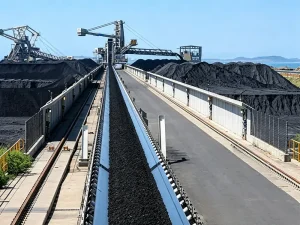
Open conveyor belts have a flat surface with no covering. The material load on them remains exposed to outdoor conditions. These include rain, wind, moisture, and so on. Additionally, you can also monitor the materials while the belt is moving. On the other hand, closed conveyor belts have enclosed designs. This means the materials loaded on them remain hidden. An outer cover protects the loaded material from spilling or slipping. Additionally, these materials remain protected against environmental conditions.
2- Dust & Pollution Control
Open conveyor belts are a poor option when dust protection and pollution control are priorities. These belts have an open design, and the material load is left exposed. Cements, sand, and other materials can leave dust outside during transportation. These dust and debris contribute to pollution, posing health risks. Conversely, the closed conveyor belts come with enclosed designs. This means the cement dust or any other material remains covered. So they don’t release dust or other contaminants, which could cause environmental pollution.
Quick Highlight: Closed conveyor belts are safer for the workers. The reason is that they don’t produce air pollution by releasing dust or other contaminants into the air. Material being transported remains enclosed, so the chances of it slipping or falling are low. So workers near the conveyor belts don’t have to worry about something falling off and hitting them.
3- Material Spillage & Protection from Weather Conditions
In open conveyor belts, there is no outer covering to protect the materials. So the chances of slippage of load materials are high in open conveyor belts. Additionally, environmental factors such as rain and wind can affect the loaded materials. Why? That’s because material loaded on open conveyor belts remains exposed. Closed conveyor belts keep the material enclosed, protecting it from slipping or falling. These closed conveyor belts are airtight, so wind, moisture, rain, etc., cannot affect the loaded material.
4- Suitability for Different Material Types & Monitoring
Open conveyor belts are suitable for transporting large abrasive materials. These include coal, ore, gravel, sand, and rocks. The reason is that these belts allow you to monitor the materials being loaded during transportation. If the materials become unbalanced, you can quickly adjust them. Closed conveyor belts are best suited for fine materials, powders, chemicals, foods, and so on. The airtight enclosed conveyor belts keep these items safe from contamination. However, you cannot monitor the material when transporting through enclosed conveyor belts.
5- Ease of Use & Installation Complexity
Closed conveyor belts are not the best option for ease of use and installation. Why? The reason is that these belts are very complex. Handling these components can be tedious. They have sensors and sealing mechanisms, which further complicate their installation.
In contrast, open conveyor belts are simple and lack complex components. You won’t have to worry about their sealing mechanism, which makes the job easier. Simply put, installing an open conveyor belt is much easier. Using open conveyor belts is more straightforward than their counterparts. Someone with no prior experience can also operate these open design conveyor belts. Closed conveyor belts require expertise to operate smoothly.
6- Durability & Lifespan
Closed conveyor belts are a superior option for durability and lifespan. The reason is that conveyor belt systems are enclosed. Their components remain covered and do not get exposed to moisture and other contaminants. As a result, wear and tear on the components of these conveyor belts is uncommon.
This gives these closed conveyor belts more durability and a better lifespan. On the other hand, open conveyor belts are prone to rapid wear and tear. That’s because they have an open design, and components get exposed to rain, moisture, and so on. These factors weaken their components, reducing durability and longevity.
Quick Highlight: Remember to buy a closed conveyor belt with a protective cover made of steel or aluminum. Such conveyor belts are more durable. I recommend not choosing a closed conveyor belt with a cover made of either rubber or plastic. Such belts are affordable but break quickly.
7- Load Carrying Capacity & Regular Maintenance
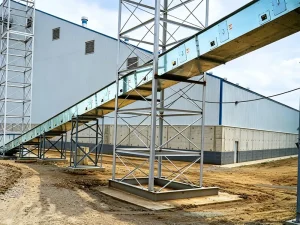
Interestingly, open conveyor belts stand out due to their higher load-carrying capacity. Their open design allows them to carry more materials, even at larger sizes. Additionally, their regular maintenance is also very simple. You can load heavy-duty materials on these conveyor belts with ease.
Conversely, closed conveyor belts are suited for lower loads due to their enclosed design. These conveyor belts require less maintenance because their components are enclosed. These conveyor belts do not fail quickly. However, once they get out of order, you’ll need professional mechanics to fix them. Repairing and maintaining these conveyor belts can be a bit more tedious.
8- Investment Cost vs Operational Cost & Application Industries
The initial cost of open conveyor belts is very low, which is a significant advantage. However, their ongoing operational costs are very high, which is a drawback. As I said earlier, these conveyor belts are not closed, so material is lost due to slippage. Additionally, their components are not enclosed, and environmental conditions can weaken them.
This reduces their lifespan, and you’ll need a conveyor belt quickly. On the other hand, enclosed conveyor belts have a higher initial cost. However, these belts do not waste material, which is a huge advantage. Above all, these conveyor belts are very durable and last for years. This means once you invest in these belts, you won’t have to buy them again for years.
When it comes to applications, open conveyor belts are well-suited for harsh, abrasive materials. You should buy them when you want to monitor the material during their transportation. On the other hand, closed conveyor belts are the best option if the material you handle is fragile, sensitive, or fine (powder-like). Below is the table comparing the applications of these two conveyor belts.
| Open Conveyor Belt Applications | Closed Conveyor Belt Applications |
| Mining (coal, ores) | Cement plants |
| Construction (sand, gravel) | Chemical industry |
| Agriculture industry | Food processing (hygienic transport) |
| Bulk material transport | Pharmaceuticals materials |
| Recycling plants | Power plants (ash handling) |
| Warehousing & packaging | Dust-free material handling systems |
Conclusion: Which One to Choose: Open or Closed Conveyor Belts?
Selecting between these two conveyor belt types can be challenging. The reason is that both of these conveyor belts offer unique value.
However, I recommend choosing a closed conveyor belt if your material is sensitive, powdered, or requires care. These conveyor belts are expensive but worth it as they don’t produce dust and pollution. On the other hand, you can choose an open conveyor belt if your budget is tight. These belts are decent for transporting large or harsh materials.
Lastly, I recommend considering your needs before choosing between open and closed conveyor belts. Both of these conveyor belts are excellent in their own ways. You should choose one that fits your custom needs and use case. I highly recommend using closed conveyor belts if you are going to use them in the food processing or pharmaceutical industries.