
Moving goods from one place to another by hand might be easier for small operations. But what if a factory has hundreds of boxes, parts, or materials to move every day? Undoubtedly, doing this manually takes time, effort, and labor costs. That’s where the guide on endless conveyor belts comes into the scene.
You can find endless conveyor belts in many places where they easily carry all types of materials from one place to another. But if you are new to them, you need to understand how they work, their types, and their features to make the right choice. If you feel confused, worry not! In this guide, I will discuss what endless conveyor belts are, their types, features, and best use cases. So let’s get started.
What is an Endless Conveyor Belt?
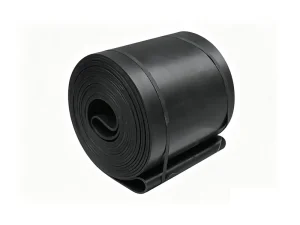
An endless conveyor belt is a continuous belt that moves products or materials from one place to another. It is made in a closed loop, so it has no loose ends during normal use. The belt moves around pulleys as the conveyor runs. This allows it to carry materials continuously, with no need to stop and restart the belt.
Here, the word “endless” is worth discussing. It does not mean that the belt is actually endless in its entire length. It basically means that both ends of the belt are joined together to make one complete loop. As the motor turns the conveyor pulley, the belt moves forward, carries the material, and then comes back around to repeat the cycle. This simple design makes it ideal for regular, continuous material handling.
Another great thing about these belts is that they come in different materials, sizes, and surface designs. So businesses can choose the right one according to their needs. For example, if an industry needs to handle heavy rock, they can choose strong steel cord endless conveyor belts. Similarly, for small boxes or food products, fabric options are available. This flexibility is why these belts are favored in many industries.
How Does an Endless Conveyor Belt Work?
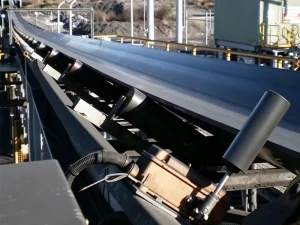
The working principle of endless conveyor belts is very straightforward. As the name suggests, they move in a continuous loop around the conveyor system. Basically, first of all, when the conveyor starts, there is a motor that provides power to the drive pulley. As this drive pulley rotates, it pulls the belt and keeps it moving along the conveyor.
Rollers placed under the belt support it and reduce friction while it travels. Now, when the goods or materials are placed on the surface of the belt, they start moving along the belt toward their destination. Once the belt reaches the endpoint, another return pulley takes over. The endless belt moves around this pulley and comes back to its starting point, from where it starts again to carry goods. What makes an endless conveyor belt different is this closed-loop design.
The two ends of the belt are joined together, so there is no loose end where the belt has to stop. It carries materials to their destination and returns to carry another load. This continuous movement continues as long as the conveyor is running. Moreover, the endless belt is not designed to move at a fixed speed. Its speed can be adjusted to match the work being done.
Types of Endless Conveyor Belts
Endless conveyor belts aren’t made to handle only one type of job. They must handle everything from lightweight to very heavy materials. That’s why Förderbandhersteller make them in different types. Each type serves a specific purpose and uses different materials. So let’s discuss what each type means and its specifications.
1- Rubber Endless Conveyor Belt
The first and most common endless conveyor belt is rubber. They are a popular choice for general industrial work because they are strong yet flexible at the same time. They handle regular contact with materials and absorb shocks without wearing out too quickly. The rubber used to make them might be natural or synthetic. You may see rubber endless belts moving coal, stone, sand, boxes, and other materials. Some have extra layers inside the rubber to give them more strength.
2- PVC Endless Conveyor Belt
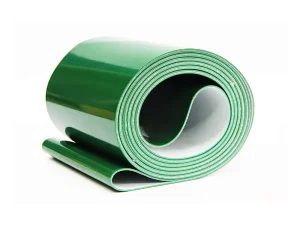
The second type is a PVC endless conveyor belt, made from polyvinyl chloride (PVC), a type of plastic. The belt has a smooth and even surface. This surface is what helps products move steadily from one place to another. PVC can also be made in different thicknesses, textures, and surface patterns to handle different material types.
One useful thing about PVC belts is that they are often reliable for clean and controlled material handling. Their surface is much easier to clean. So in places where dirt and dust accumulation is common, they prove handy. You can use these belts to carry boxes, packages, small parts, and other lightweight products. But remember, PVC endless belts aren’t meant for carrying heavy materials. They work well with light or medium loads.
3- PU Endless Conveyor Belt
A PU endless conveyor belt is made from polyurethane, commonly called PU. PU is known for being strong yet flexible. This means the belt can handle regular movement without losing its shape. At the same time, PU endless conveyor belts resist wear, oil, grease, and some chemicals. This is a big benefit in places where the belt comes into contact with these materials during normal work. Their smooth surface also makes cleaning easier, something that matters a lot in food processing.
4- Fabric or Textile Conveyor Belt
A fabric or textile endless conveyor belt gets its strength from one or more layers of fabric inside. These inner layers use materials such as polyester, nylon, or a mix of different fabrics. The number of these layers varies from belt to belt. However, the outside is usually covered with rubber or another suitable material.
This construction gives Gewebeförderbänder enough strength to carry different materials. What makes fabric belts special is the balance between strength and flexibility. The inner fabric layer supports the belts; however, the outer layer prevents abrasion. You can find textile belts in many everyday industrial jobs. They are commonly used to move packages, boxes, raw materials, sand, gravel, and other products.
5- Steel Cord Endless Conveyor Belt
Now it comes to steel cord endless conveyor belts are made for jobs where a normal belt cannot be strong enough. These belts don’t rely only on fabric layers for support. Instead, this belt has steel cords running through its inside. On the outer side of these cords, there is a rubber cover that protects the inside.
This extra strength is especially useful when the conveyor has to carry very heavy loads or move materials over long distances. For example, large mining operations use steel cord belts to transport coal, ore, rock, and other heavy materials. The belt here handles high pulling forces without stretching.
6- Cleated Endless Conveyor Belt
A cleated endless conveyor belt has raised pieces called cleats. Those cleats are fixed across its surface. The cleats divide the belt into small sections and keep products or loose materials in place as the belt moves. The belt still works as a continuous loop. Still, the added cleats make it easier to carry materials that often slide on a normal flat belt.
Its biggest benefit is when the industry has to move material upward at an angle. On a smooth belt, loose items start sliding back as the belt goes up. Right? But with this belt, cleats act like small barriers that hold the material in place. This allows the conveyor to move products to a higher level. Cleat size varies with the nature of the material being carried.
Key Features of Endless Conveyor Belts
Now you have a basic idea about the types and definition of endless conveyor belts. Right? Next come their features. No doubt, endless belts make transporting goods easy in a continuous loop. But that’s not all! Let’s discuss the key features that set them apart.
-
Continuous Operation
The major feature of the endless conveyor belts is their ability to keep moving in a loop. As I said above, both ends of the belt are joined together. It means there is no loose end that needs to stop at the end of the conveyor. Once the belt completes one round, it comes around and starts the next one. This becomes very useful when workers have to move goods again and again.
-
Good Load-Carrying Ability
Another useful feature of an endless conveyor belt is its ability to carry a wide range of materials. Some endless belts are made for light items such as small packages and boxes. Others carry heavy materials like rocks, coal, or other industrial goods. However, the exact capacity still depends on its construction and design.
-
Flexible Design
Endless conveyor belts are not made in one fixed size or style. These belts can be wider, narrower, thicker, thinner, longer, or shorter. The belt material also changes based on what it needs to carry and where it will be used. This flexibility gives industries freedom to choose the one that matches their exact needs.
-
Resistance to Wear
An endless belt works continuously, day after day. It runs over rollers and pulleys and carries different materials on its surface. All this naturally wears down the belt. Interestingly, an endless belt is designed to resist this daily wear without damage. This resistance helps the belt run continuously without frequent replacements.
-
Different Surface Options
Many materials don’t need to travel on a flat surface. That’s why manufacturers make the top surface in different textures, patterns, or raised parts. For example, a smooth surface works well for boxes and cartons that sit safely on the belt. But if the material tends to slide, a textured surface provides better grip. When loose materials need to move upward, the belt has raised sections called cleats. These options make it easier to transport every type of material.
Applications of Endless Conveyor Belts
Due to such useful features, endless conveyor belts have become a must-have in many industries that carry goods. Actual use can vary widely from one industry to another. So let’s discuss the major industries that use endless conveyor belts.
1- Manufacturing Industry
In a manufacturing plant, materials usually have to pass through several stages before a product is finished. Carrying every item from one workstation to another by hand would take a lot of time. However, conveyor belts make this movement much easier and keep products moving along a fixed path. For example, a belt takes parts from an assembly area to an inspection station and then toward packaging. Workers can focus on their own tasks while the conveyor keeps products moving.
2- Mining Industry
Mining is a much tougher environment. Here, large amounts of coal, rocks, ore, and other heavy materials are moved, sometimes over very long distances. In these environments, regular lifting equipment often can’t keep up. That’s where endless steel cord Förderbänder für den Bergbau come into play. These conveyors provide a continuous way to move material through the site.
3- Food Processing
Another use of the endless conveyor belts is in food processing. Food products need to move through several steps, such as washing, sorting, processing, checking, and packing. An endless conveyor keeps these products moving between these areas. But belts made for food transportation are specifically made to maintain hygiene.
4- Warehousing & Logistics
When you walk into a busy warehouse, you see boxes moving along conveyor belts almost constantly. Packages arrive in one area, are sorted or checked, and then move to another part of the building. Doing all this by hand would be slow, especially when thousands of packages are handled each day. An endless conveyor belt keeps the process moving. It carries boxes toward sorting areas, packing stations, storage sections, or shipping points.
5- Packaging Industry
Packaging lines often involve a series of small steps. A product first needs to be filled, sealed, labeled, checked, and packed before it is ready to leave the facility. Here, endless conveyor belts connect these steps and keep the products moving at a steady pace. The belts carry products toward a machine, pass them through an inspection point, and then take them to the next stage.
6- Recycling Plants
Now there is a recycling plant, which is a main user of the endless conveyor belts. Recycling plants handle a mixture of materials that need to be sorted before processing. Items such as plastic, paper, glass, and metal all travel to these recycling points through endless conveyor belts.
Schlussfolgerung
Endless conveyor belts are one of the most effective solutions to carry different materials from one place to another. They work in a continuous loop, with no loose ends. This continuous loop makes it much easier to move different things. But not all endless belts are the same; this guide covers several types. Each type has a unique design purpose and use. However, the right belt depends on the job. Before choosing one, consider the material, weight, speed, temperature, and working area.