
Conveyor belts are essential in many industries. They transport heavy-duty materials from one location to another. However, if the conveyor belt has poor tension, it can sag or fail during operations. That’s why understanding conveyor belt tensioning is essential.
If the belt is too loose, it will sag or slip off the drive pulley. As a result, you won’t be able to transport the materials. Additionally, if the belt is too tight (high tension), it can be exposed to extreme stress and affect operation. That’s why the right tension in the conveyor belt is very important. In this article, I will cover the basics of conveyor belt tensioning. So, let’s get started.
What Is Conveyor Belt Tensioning?

Conveyor belt tension is essential for proper belt operation. Without the right tension or pulling force, these belts can fail, sag, or slip from the pulley.
Conveyor belt tensioning is the process of ensuring the right pulling force for the conveyor belts. As a result, the conveyor belts have the right tension and do not sag or loosen. Additionally, conveyor belt tension ensures the belt does not slip from the drive pulley. Instead, it stays fully engaged, moving around the pulley while transporting materials.
As you know, conveyor belts come with motors. This motor uses electricity to run and produce rotational force. This rotational force or power is transferred to the drive pulley. The drive pulley then holds the conveyor belt and transfers power to it so it runs smoothly. The conveyor belt is wrapped around the drive pulley.
The rotational movement or power keeps the conveyor belts running. If the conveyor belt is at the right tension, it won’t sag or get loose. Instead, it will keep working as the drive pulley moves. If the belt has low tension, it will slip from the drive pulley or sag. This can affect conveyor belt operation. In other cases, the belt may have too much tension, which is also wrong for the belt.
If this happens, the belt will face unnecessary load and stress. If the tension is too high, it can create extreme stress and damage the belt. Remember, keep belt tension at a moderate level. Both too low and too high tension are not good for conveyor belts. Conveyor belt tension is about adjusting the tension so the belt operates smoothly.
Why Is Proper Conveyor Belt Tension Important?
The right conveyor belt tension is important for smooth operation. Belts with the wrong tension may face issues such as slippage, sagging, and so on. In the section below, I will discuss key reasons why conveyor belt tension is crucial.
-
Prevents Belt Slippage
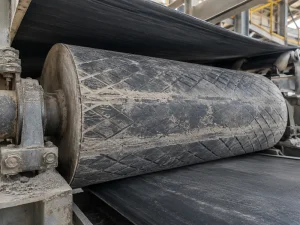
As I said, the conveyor belts wrap around the drive pulley during operation. If the grip between the drive pulley and the belt is weak, the belt may slip from the drive pulley. If this happens, the drive pulley will rotate alone. Without grip on the drive pulley, the belt won’t move to transport materials.
-
Controls Excessive Belt Sag
Conveyor belts can sag when they have improper tension. This is even more common when you transport heavy-duty materials. Proper conveyor belt tension keeps the belt from sagging. This means the belt won’t drag downward even when carrying heavy loads.
-
Reduces Belt and Splice Wear
Conveyor belt tension helps reduce the wear of both the belt and the splice. How? Actually, when the conveyor belt is too tight, it puts more stress on the belt and splice. This high stress weakens belts and makes them more prone to wear. Proper tension removes excessive stress from the belt and splice, making it work smoothly.
-
Protects Shafts and Bearings from Excessive Loads
Conveyor belts that are too tight can expose different parts to unnecessary loads. These parts include pulleys, shafts, and bearings. A belt that’s too tight typically pulls harder on the pulley, exposing it to more stress. This stress can cause the pulley to wear out quickly. Proper conveyor belt tension keeps parts from being exposed to high stress.
-
Better Service Life of the Conveyor System
As mentioned above, proper belt tension ensures all components operate under the right conditions. They are not exposed to excessive stress. This way, the whole conveyor system operates more efficiently and lasts longer. Additionally, a properly tensioned conveyor belt is less likely to fail. The regular maintenance of the conveyor system with the right belt tension is minimal. These systems can last for years, which is a significant advantage.
How to Tension a Conveyor Belt?
Tensioning a conveyor belt is a very important procedure. However, many people have no idea about how to tension conveyor belts. In the section below, I will guide the tensioning process in easy-to-follow steps.
1- Stop the Conveyor & Apply LOTO
First, stop the conveyor belt and isolate it from all electrical sources. I also recommend applying Lockout/Tagout (LOTO). This way, the conveyor belt won’t turn on accidentally when you’re working on it. This is the most important step to avoid any accidents. Note that you can adjust the conveyor belt tension only when it is turned off. Therefore, disconnect it from power and keep it off while adjusting the tension.
2- Locate the Take-up System
Once you disconnect the conveyor belt from the power source, locate the take-up system. This mechanism on the conveyor belt helps adjust and maintain tension. The take-up system can be in different positions on conveyor belts. In most belts, it is present near the tail pulley. However, its location can vary depending on the conveyor belt design. Conveyor belts can have different take-up systems.
3- Loosen the Take-up Locking Nuts & Adjust the Take-up Screws
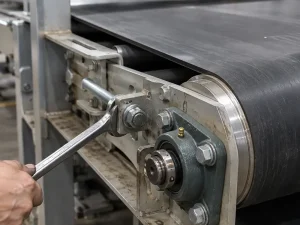
Have you found the take-up system? If so, loosen the locking nuts. These locking nuts typically hold the adjustment screws in their specific place. After loosening the locking nuts, turn the take-up screws. Remember, you must turn the take-up screws evenly on both sides. This moves the pulley and increases belt tension. Never increase the tension and tighten the belt in one go. Instead, I recommend increasing the tension slowly and gradually for best adjustments. Stop tightening when you reach the best tension for your belt.
4- Secure the Locking Nuts & Run the Conveyor
Once you’ve adjusted the belt tension, you can tighten the locking nuts. This ensures the screws do not move when the conveyor belt operates. Remember, if you don’t tighten the locking nuts, your belt may not reach the tension you set. Once done, remove all tools from the belts. After that, you can remove the lockout/tagout. Then connect the conveyor belt to a power source and run it. When the conveyor belt is running, you can observe any sagging, slipping, or noise from the belt.
5- Check for Slippage, Sag and Act Accordingly
When the conveyor belt runs, you can analyze its operation. If something is wrong, you can take immediate measures to fix it. You might notice the belt not moving with the drive pulley. This generally happens when the belt is too loose and slips from the pulley. Additionally, the conveyor belt can sag or remain loose while operating. This sagging issue is also due to very low tension. To fix this, adjust the take-up locking nuts and screws to increase tension. You can keep adjusting the tension until you reach the ideal level.
Factors That Affect Conveyor Belt Tension
Interestingly, conveyor belt tension is an important parameter. However, it is affected by different factors. In some cases, your conveyor belt may need more tension. For example, a conveyor system with a longer belt typically needs more tension. Similarly, tension should be higher when the belt carries heavy-duty loads.
In contrast, some cases allow low tension or tight work areas. Key factors that affect the required tension in the conveyor belts are as follows:
- Heavier material load
- Longer conveyor length
- Higher conveyor speed
- Steeper incline
- Lower conveyor speed
- Flat or less-inclined conveyor
- Greater friction
- Frequent starting and stopping
- Poor drive-pulley grip or insufficient wrap angle
Frequently Asked Questions
What is conveyor belt tensioning?
Conveyor belt tensioning is the process of applying, adjusting, and maintaining belt tension. As a result, conveyor belts run smoothly and do not sag, loosen, or slip from the pulley.
How do you know if a conveyor belt needs tensioning?
You can check whether the conveyor belt needs tensioning. If the belt sags or slips from the drive pulley, it needs tensioning, and vice versa.
Can you over-tension a conveyor belt?
Yes. You can over-tension a conveyor belt, but you should avoid it. Over-tensioning the belt exposes it to stress and unnecessary loads.
How often should a conveyor belt be tensioned?
There is no exact time period for when the belt must be tensioned. You should check and analyze the belt conditions to determine whether it needs tensioning. If the belt sags or is loose, you can tension it.
What is the difference between belt tensioning and belt tracking?
Belt tensioning is about applying pulling force on the belts. This keeps the belt from sagging or loosening during operation. Belt tracking keeps the belt centered on the conveyor system.
Conclusion
In conclusion, conveyor belts are important devices used to transport materials. What makes these conveyor belts stand out is their ability to carry heavy-duty loads. However, the belt functions properly only with the right tension adjustment. Tension refers to how tight the belt is while it is moving.
If the conveyor belt is too tight, it can be exposed to unnecessary loads or stress. Not only the belt, but other components such as the shaft and pulley bearing also face stress. If the belt is too loose, it can sag and slip from the pulley. Therefore, proper conveyor belt tension is crucial for proper operation. In this article, I have discussed everything about conveyor belt tensioning.