
Conveyor belts have become common across many industries. They help transport cargo and heavy-duty logistics effortlessly. However, belt tracking keeps the belt centered on the conveyor system. In some cases, conveyor belts do not stay centered in the conveyor system. Several common causes of conveyor belt tracking issues exist.
Remember, if conveyor belts face tracking issues, the system may not perform optimally. This issue is even more noticeable when the conveyor belt is used to transport heavy-duty logistics. Understanding conveyor belt tracking issues and their causes is very important. In this article, I will cover the basics of these issues and the reasons behind them. So, let’s get started.
What is the Conveyor Belt Tracking Issue?
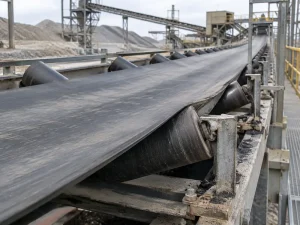
Before discussing causes, let’s first understand what belt tracking issues are!
Conveyor belt tracking issues happen when the belt is not centered on the conveyor system. The belt can move left or right instead of staying centered as it moves along the conveyor system. As a result, the belt edges can contact the conveyor frame. This contact causes rubbing and wear on the conveyor belt.
Conveyor belt tracking issues are often called belt mistracking or belt misalignment. In an ideal scenario, the conveyor belt moves along the conveyor centerline. As a result, the belt keeps moving and safely transfers the materials. However, sometimes the belt moves to the right or left instead of staying centered. This conveyor belt misalignment results in belt mistracking.
Belt mistracking has two primary disadvantages. First, this issue is disastrous for the belt itself. How? In this case, the belt moves to the right or left. As a result, it can contact the conveyor frame. This contact results in rubbing and wear on the edges of the conveyor belt. Second, konveyör bantları operate much more slowly.
You’ll frequently stop the conveyor belt and realign it in the middle. Additionally, conveyor belts with mistracking issues can also require regular maintenance. This results in more downtime, affecting the conveyor belt’s efficiency and performance. Heavy-duty materials can become unbalanced when the conveyor belt is facing mistracking issues. Loaded items can also slide and fall off the belts.
Common Causes of Conveyor Belt Tracking Issues
Multiple factors can contribute to conveyor belt tracking issues. Understanding these causes is necessary to fix the issues. In the section below, I will discuss common causes and their quick solutions.
1- Misaligned Pulleys
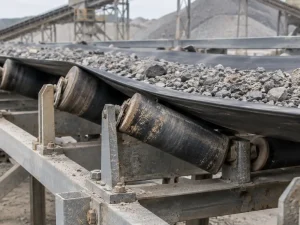
Pulleys play a central role in how conveyor belts operate. They actually guide the belts and help them change direction. Different types of pulleys are used in a conveyor belt system. These include head pulley, tail pulley, take-up pulley, and so on. These pulleys must be aligned properly so that the conveyor belt remains centered on the conveyor system. Sometimes, these get misaligned.
As a result, these pulleys do not apply equal force to the conveyor belts. So the belt, instead of traveling along the centerline, shifts to the right or left. This slight shift in position causes the belt to mistrack. To fix this, you’ll have to realign the pulleys in the center of the conveyor belt. You can also check for any loose mounts or shifted bearings. Realigning the pulleys may fix mistracking if it is caused by misalignment.
2- Misaligned Idlers or Rollers
Idlers and rollers are important parts of the conveyor belt. They provide support for the conveyor belt and keep it in good condition. However, if these two parts get misaligned, they can cause mistracking issues. Sometimes, these idlers can get shifted, resulting in incorrect angles. As a result, these idlers and rollers expose the belt to uneven or sideways force. This sideways force can cause belt mistracking issues. I recommend checking the alignment of both idlers and rollers. Also, if any rollers or idlers are damaged, replace them.
3- Uneven Belt Tension
Conveyor belt tension is a crucial parameter. Why? A belt with the right tension runs smoothly. If one side of the belt has more tension than the other, it can cause mistracking. This is because each side experiences different forces. The conveyor belt starts to move towards the side with more tension. As a result, the belt can keep dragging in one direction and collide with the conveyor frame. To fix this, readjust the tension and ensure both sides of the belt have equal tension. This will prevent belt mistracking and help the belt run efficiently.
4- Seized or Damaged Rollers
As I said above, rollers are an important component of the conveyor belt system. They support the belt by rolling or rotating. However, these rollers can sometimes wear out or become damaged. As a result, any one roller may not rotate when the belt moves over it. The belt may experience more friction in one area. So, the belt can slide toward the area with more friction. To fix these issues, I recommend checking the rotation of all the rollers. If any roller is not rotating properly, replace it.
5- Twisted or Misaligned Conveyor Frame
Conveyor frames act as the body of the conveyor belt systems. All other components are mounted on these frames. They also provide support and a base for other components. These include pulleys, idlers, rollers, belts, and so on. However, if the conveyor frame is not in good shape, this can lead to serious issues. How?
When the conveyor frame is bent, it can misalign other components. As a result, these misaligned components can apply uneven driving force to the belt. This uneven force causes the belt to mistrack. You should check and ensure the frame of the conveyor system is in good condition. If any part is bent or damaged, fix it to keep the conveyor belt running smoothly.
6- Belt Camber or Cupping
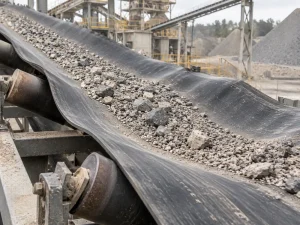
The conveyor belt must maintain a stable shape. If the belt has curves or bends, it may not sit correctly on the rollers or pulley. Some common issues the conveyor belt system can face include camber and cupping. Camber refers to a conveyor belt that curves sideways. In contrast, cupping refers to a conveyor belt that curves across its width.
Both conditions affect the conveyor belt’s shape. As a result, the conveyor belt may not sit on rollers or pulleys. Even if it does, it may still have mistracking issues. As a solution, I recommend checking for any curved-shaped dents or bends. Minor curves are acceptable, but severe shape abnormalities require repair.
7- Incorrectly Installed Belt Splice
The belt splice joins two sides or ends of the conveyor belt. This allows the conveyor belt to form a continuous loop. If this splice is installed correctly, it provides excellent belt stability. It also ensures consistent tension, which is necessary for the belt to operate properly. Without this tension, the belt may sag. However, if it’s installed incorrectly, it can cause uneven force or tension on the conveyor belt, leading to mistracking issues. To fix this, I recommend checking the splice installation. If the splice is damaged, you should replace it. If it was installed incorrectly, reinstall it properly to prevent mistracking.
8- Improper Skirting & Excessive Belt Sag
Improper skirting and belt sag can cause mistracking issues. As you know, skirts are installed on both sides of the conveyor belt. These skirts ensure materials loaded on the belt do not slip away. However, if the skirt is installed or pressed too tightly, it can increase belt friction. This friction can create an uneven (sideways) force, resulting in mistracking.
Additionally, when the belt sags excessively, it loses its stability. As a result, the belt can shift left or right. I recommend installing the skirts carefully and checking skirt pressure. Also, check belt condition. If it sags too much, you should adjust the tension and ensure it remains in good condition. Ideally, the belt should not be too tight or loose.
9- Worn Pulley Faces & Uneven Foundation
As discussed above, the pulley is an important component. It helps shift the driving force to the belts and guides them as well. However, sometimes the pulley face can get damaged or worn. As a result, the belt may not receive enough force. Additionally, worn face pulleys may not direct or guide the belt accurately. This can cause the belt to move slightly left or right instead of staying on the centerline. This eventually results in belt mistracking.
Additionally, an uneven foundation can cause the conveyor frame to shift out of alignment. All parts on the frame can become disturbed. If these parts misalign, they can cause the belt not to move in the center line. You should check the pulley face. If anything is wrong, have it repaired. Additionally, I recommend keeping the foundation level and stable to prevent belt mistracking.
Sonuç
In conclusion, conveyor belts are indeed very useful machines. Their use is becoming more popular with time. However, these belts can get problems, especially if left unchecked or unmaintained for long. Among these issues, belt mistracking is one of the most common.
However, many have no idea what belt mistracking is and how to fix it. Interestingly, several factors contribute to belt mistracking. In this article, I have discussed the basics of mistracking and nine causes of this issue. You should understand each reason so you can fix the issue if your conveyor belt has them.